
 By
By This was may second time at the the DevOpsDays Zurich in Winterthur, Switzerland. The flower theme was replaced by bubbles this year.
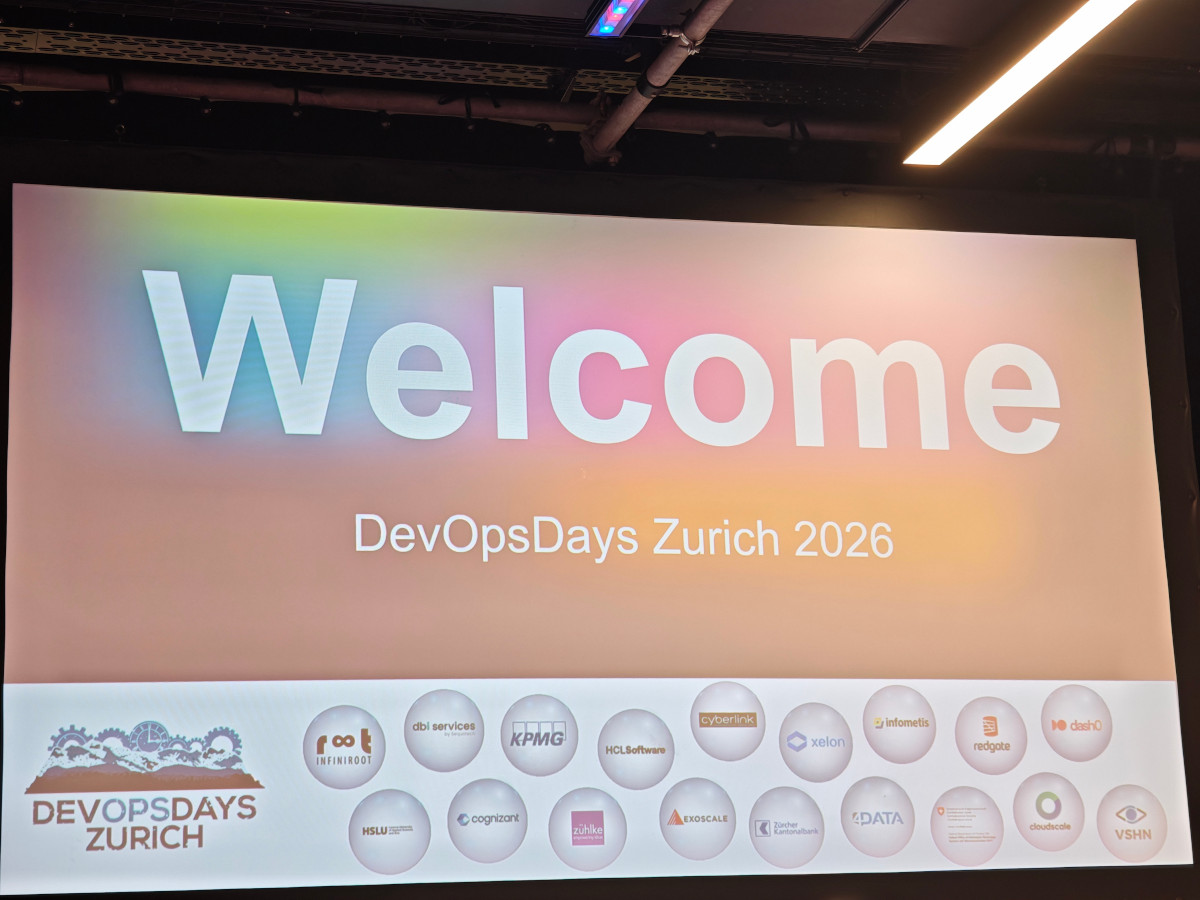
Note: Although the conference is called DevOpsDays Zurich, the event takes place in Winterthur. Winterthur is a city in the canton (state) of Zurich in Switzerland.
Here is a quick review of this year's DevOpsDays Zurich, including some of the talks and presentations.
The Opening Ceremony
As in the years before, Dirk Lehmann just fit in perfectly as the master of ceremonies and reminded everyone that "we're nice people. Nice people are nice to each other".
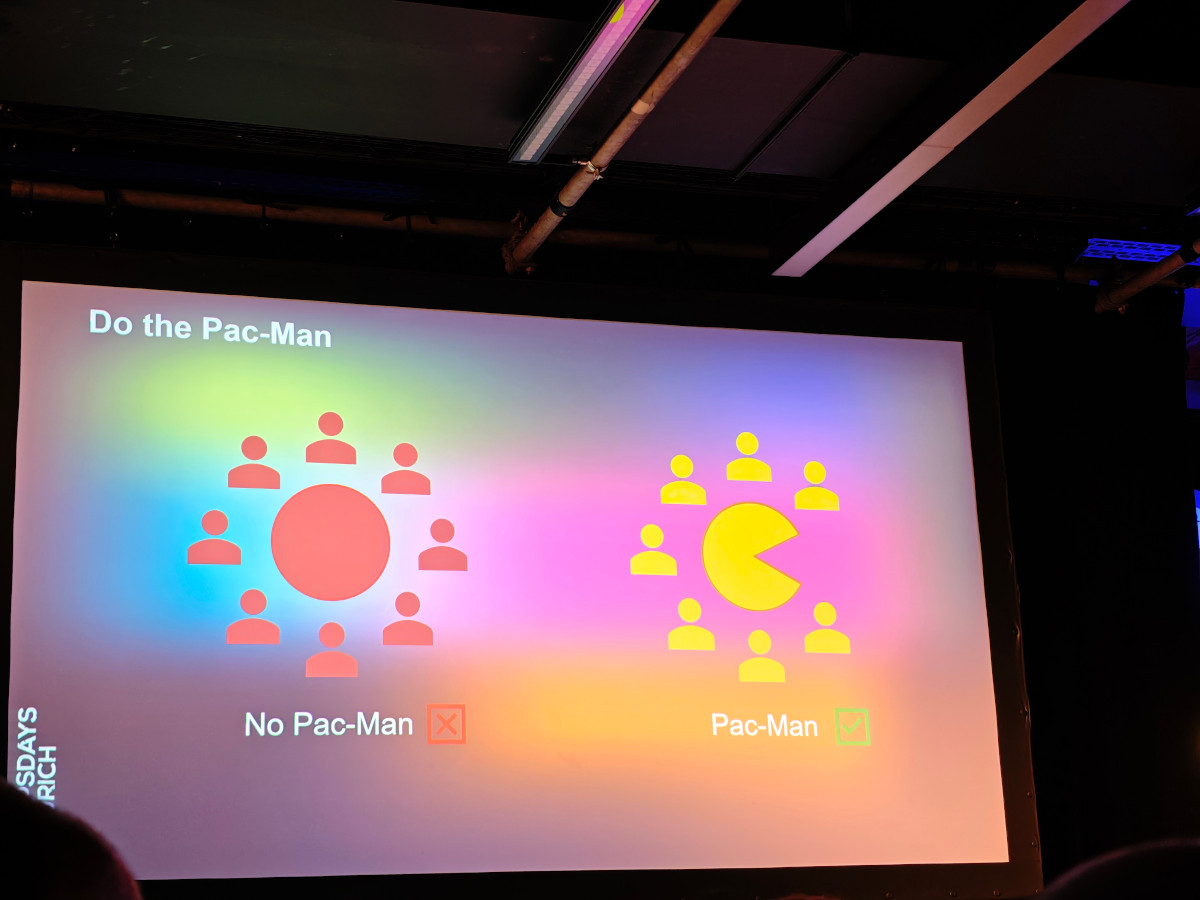
For the first time attendees the "Pac-Man" concept was probably new. The concept is basically that whenever there's a discussion about a topic formed (during the breaks, in the halls, etc), there's usually a circle forming. People are left out, even though they might be interested in listening, too. With the Pac-Man you leave one space open so anyone else can join. And if the circle closes again, you form another Pac-Man. Easy, right?
Engineering & Ethics
The Keynote was delivered by Bertrand Delacretaz. With more than 40 years of experience in the IT sector, and recently retired (well deserved, Bertrand!), his talk about ethics was a good refresher for everyone working in IT.
Especially with AI these days, the ethics are extremely important. For what are we going to use technology? Is it for the good or for the bad? But Bertrand also explained, that ethics can differ from person to person, from organization to organization.
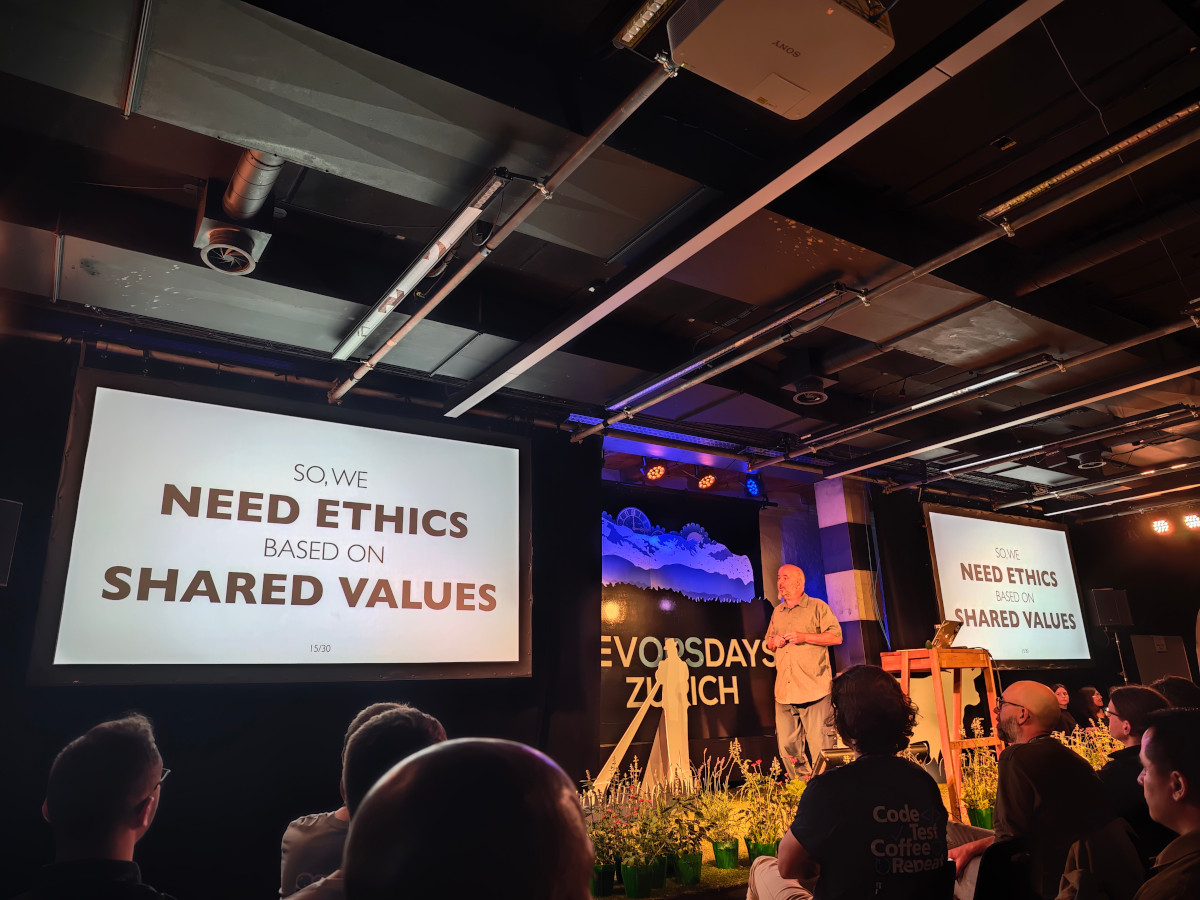
Ethics and policies are created based on personal values. He mentioned a nice example: If you grow up in a small village, you're used to greet everyone – or it could be considered rude. If you grow up in a city, you don't bother to greet anyone you cross on the streets. Different values result in different ethics.
Create space!
A very interesting presentation was held by Olga Kristjansdottir, coming all the way from Iceland.
When she talked about the "firefighting mode", a lot of people in the room silently nodded. We all know these situations, when everything needs to be paused to fix something very urgent. But if this becomes the daily task, you cannot improve your existing systems or processes.
She showed how she helped engineers move from reactive to sustainable problem-solving. The goal to success? Space. Create space. This also means to say "No", or better "Not yet" to management.
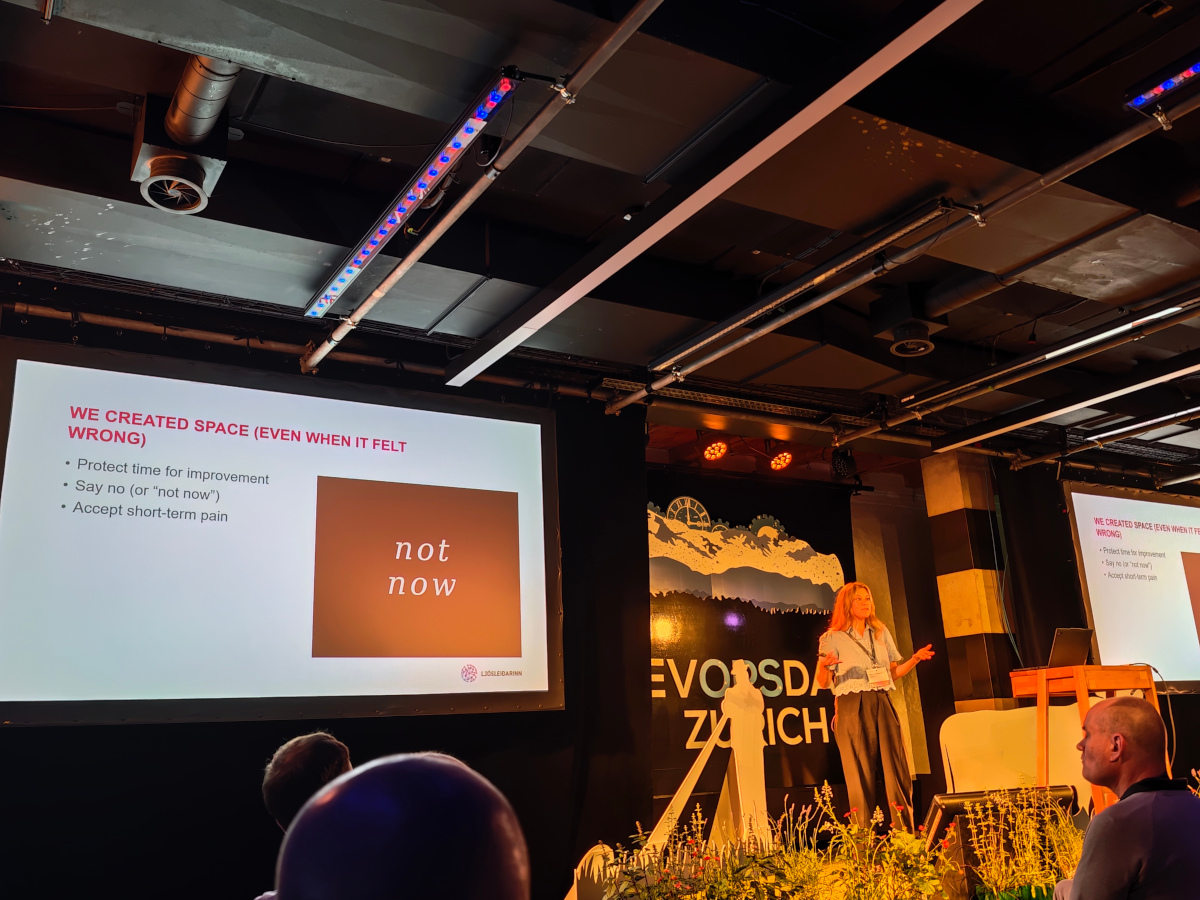
In the Q+A afterwards someone asked how to get this to work (say no to management) and Olga clearly said that management needs to be on board. Luckily in her company the management was indeed on board, and this allowed to create some space for improvements of the whole team and operations.
AI as Model-as-a-Service platform
In the next presentation, Camille Nigon from Red Hat showed how they built a sovereign AI platform, with a "Model as a Service" concept.
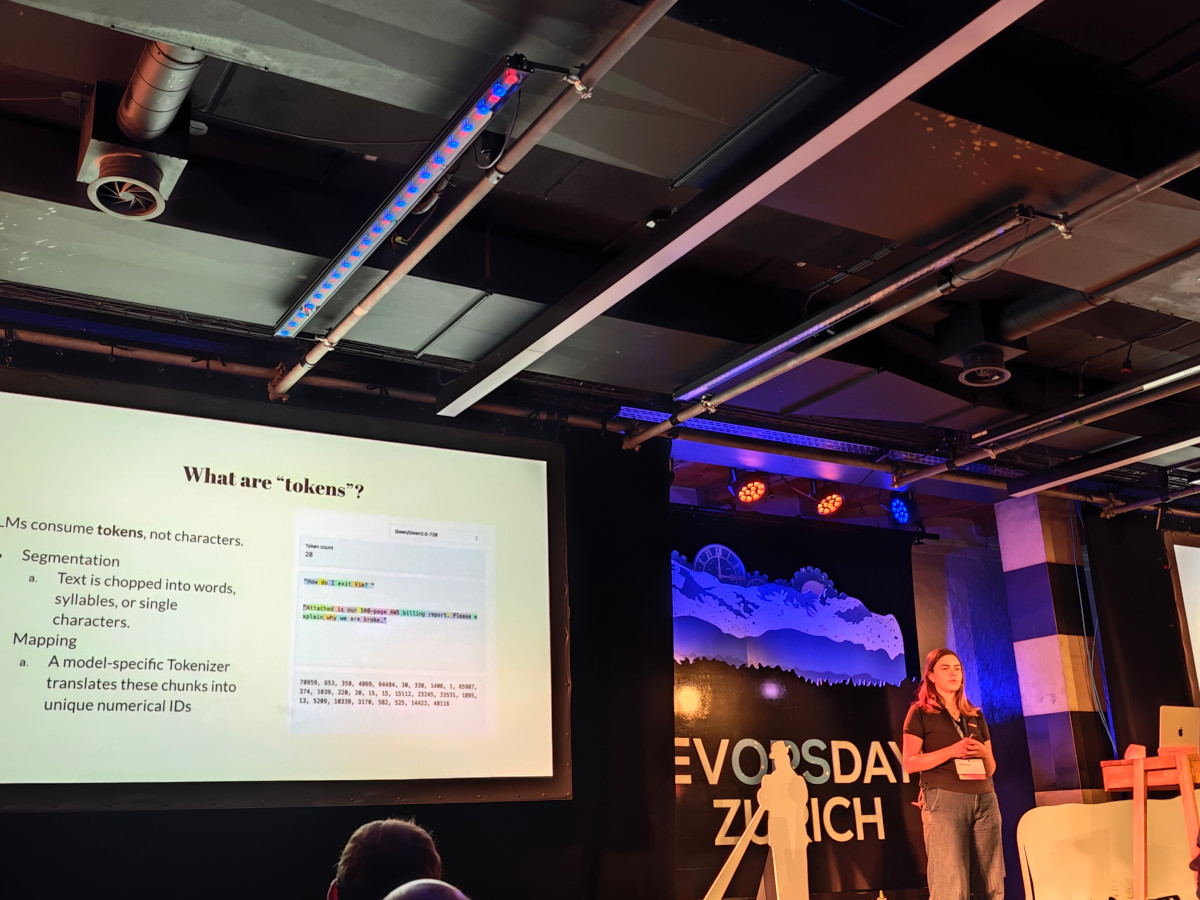
She used a company coffee machine as a metaphor for today's usage on AI. If you use a lot of coffee, you might get a subscription at the coffee shop next door. You don't have to do an investment nor the work, you just get your coffee. But this also means you're dependent on the availability of the coffee shop and their prices. The coffee shop could just increase prices for whatever reason. The alternative is to invest in a large coffee machine yourself. And this can also be applied to AI. You can build your own LLMs on your own hardware and offer models as a service in-house.
Camille also talked about improving the "usage". By setting a token limit, similar to what AI Providers do. This can be controlled by an API they deployed on their Kubernetes clusters.
Leadership dealing with Heroes
Quick forward to day 2, after a nicely organized evening event. Thursday morning kicked of with the keynote from Limor Bergmann Gross. With her vast experience as leader for scalable teams, she talked about her experiences while leading a DevOps team at DigitalOcean.
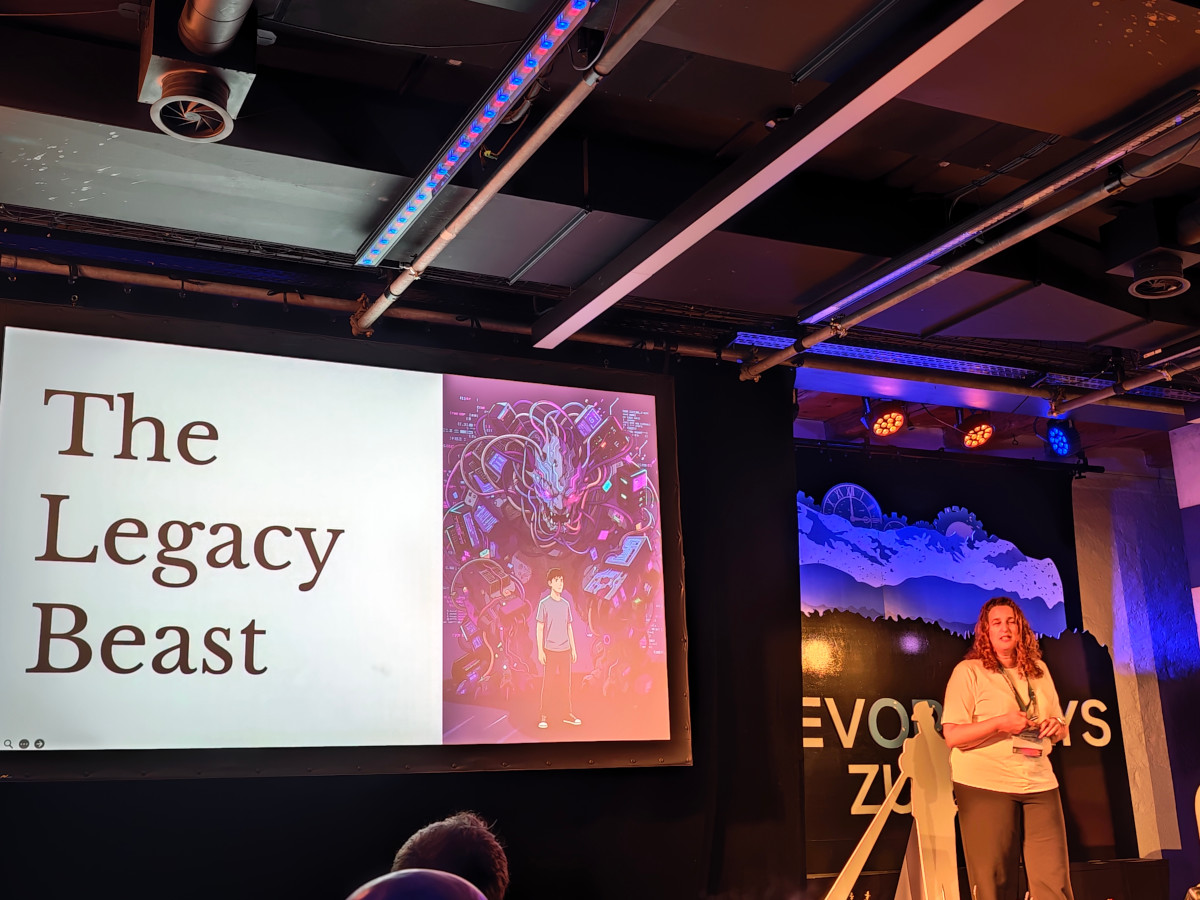
Limor perfectly picked up a buzz-word, which has been used a lot on this DevOpsDays edition: Heroes. Heroes are the ones, mostly a single person, fixing stuff when it breaks. The firefighters you call, when your company is in trouble.
But how do you scale heroes? Or better: How to not have heroes but have spread knowledge across the team?
When she joined the team, they had problems of hiring engineers. Not because there weren't any applications, but because the team looked for an engineer who could do anything. This is when Limor had to split the tasks and operations of the team into two different sections – and hire engineers according to the relevant tasks.
The personal experiences she shared certainly caused (definitely should cause) some reflection in team leaders.
Automated Root Cause Analysis
When Melchior Thambipillai took the stage, it was all about finding the needle in the haystack. But automated.
Whenever there's an incident, the longest time from start to end of an incident is the "Root Cause Analysis". What happened, where is the problem? This takes much longer than the fix itself.

At Swisscom, Melchior and his team deployed a system which uses distributed tracing (using Tempo) across multiple systems and business processes. In his presentation he showed use-cases of business processes failing and then "learning" from previous similar incidents.
To deploy distributed tracing into such a large organization with complex business processes takes a long time. Melchior mentioned it took around 7 years to get to the current state. But this also contains trying all kinds of different software and technologies and sometimes realizing that it wasn't a good case. And it also requires investment of other teams, by adding tracing not only to systems, but to be also part of the application (code) itself.
Platform Engineering Journey
When Gang Luo and Kristina Kondrashevich from Electrolux began their talk, I quickly realized that this is going to be the best – for me personally – presentation. Because I (again personally) was looking forward to hearing about different Platform Engineering solutions at this DevOpsDays conference. The duo Gang and Kristina did not disappoint me.
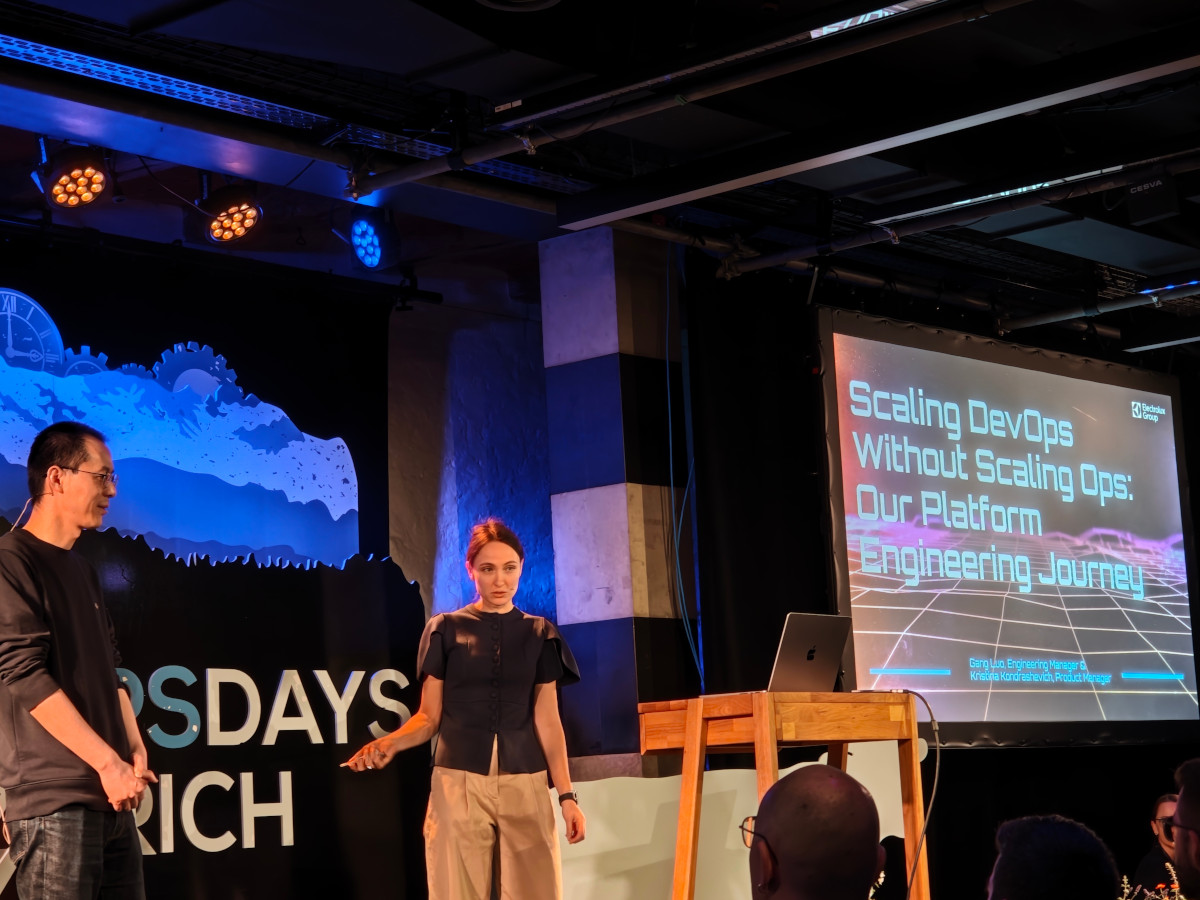
The two SREs from Electrolux explained how they initially adopted SRE practices, but later found them difficult to apply across autonomous product teams. Sure, they could have hired more SREs, but they went another, very interesting way: They build their own IDP (Internal Development Platform).
The result is InfraKitchen. An IDP that allows developers to build their resources based on templates from the SREs. This way you can perfectly split the responsibilities: The SREs integrate the platform in the Cloud (e.g. AWS or GCP), build templates, specify the policies – the developers choose their needed resources according to the templates/catalog in InfraKitchen.
All this uses Terraform and Git in the background. And the best of it all: InfraKitchen is open source! A very interesting project I will be personally taking a closer look at.
The DevOpsDays itself
One of the most underrated highlights are hall meetings and discussions. Where conference attendees just casually talk to each other during a break. These are – for me personally – the real benefits of such conferences. I've connected to many people. Some I knew beforehand and it was nice to catch up. And it was nice to meet new contacts and hear their stories and what they are doing.
Already last year I wrote that the location, the "Alte Kaserne Winterthur" is almost too small for the conference. This hasn't changed this year either, as the conference was sold out already weeks ahead. Filling up the location with ~250 people creates heat – and bad air. Dirk did mention that the AC was already running at full speed, but still – it was very hot in there. There's certainly some room of improvement there. On the other hand, the multi-floor layout with some open spaces and relax corners were also helpful to catch a breath.
At the evening event in the Pearl location, old and new connections were revived and formed. This allowed to have discussions going into technical details or just having a casual talk about what's going on in life – while enjoying some offered drinks.
Big thanks to the organizers of DevOpsDays Zurich for the great organization and smooth event!
Next year will be DevOpsDays ZH's 10 year anniversary. I'm curious what they will come up with ;-).


